
Why Google Ads Matter for Medical Practices
Patients no longer wait for word-of-mouth referrals. Today, they search online for doctors, medical services, and healthcare solutions. This digital shift has made Google Ads for doctors one of the most effective marketing tools available to healthcare providers. When potential patients search for “cardiologist near me” or “emergency dental care,” Google Ads ensures that qualified medical practices appear at the top of search results.
Google Ads operates on a pay-per-click (PPC) model, meaning doctors only pay when interested patients actually click their advertisements. This efficiency makes it an ideal investment for medical practices looking to grow their patient base.
Understanding Google Ads and Its Benefits for Medical Professionals
How Google Ads Works for Healthcare Providers
Google Ads matches keywords—the terms patients search for—with relevant advertisements from medical providers. A dentist might create ads for searches like “teeth whitening near me” or “root canal treatment.” When someone in their service area searches these terms, the dentist’s ad appears prominently in Google’s search results.
The beauty of this system is its precision. Medical practices only pay for clicks from genuine potential patients actively seeking their services, not random impressions or uninterested viewers.
H3: Key Advantages for Your Medical Practice
Immediate Visibility: Unlike search engine optimization (SEO), which takes months to show results, Google Ads provides instant visibility. A new medical practice can start receiving patient inquiries within hours.
Highly Targeted Reach: Doctors can target patients by location, age, interests, and search behavior. A family medicine doctor can target families with children in their specific city, ensuring marketing budgets aren’t wasted on irrelevant audiences.
Measurable Results: Every click, impression, and conversion is tracked. Medical professionals know exactly how many patient inquiries their ads generate and the cost per consultation.
Flexible Budget Control: Whether a practice has a modest marketing budget or substantial resources, Google Ads scales accordingly. Doctors can start small and increase spending as they see positive results.
Brand Authority: Appearing at the top of Google search results establishes credibility. Patients inherently trust medical providers who rank highly in search results.
Types of Google Ads Campaigns for Healthcare Professionals
Search Ads: Capturing High-Intent Patients
Search ads are text-based advertisements appearing when patients actively search for medical services. A patient typing “orthopedic surgeon near me” will see search ads from local orthopedic practices. These ads work exceptionally well for healthcare because they target patients with immediate needs—someone searching for a “root canal specialist” is ready to book an appointment, not just casually browsing.
Display and Video Ads: Building Brand Awareness
Display ads appear across thousands of websites, apps, and YouTube channels. Medical practices use display ads to build brand awareness among potential patients who might not immediately need services. Video ads on YouTube are particularly effective for healthcare, allowing doctors to share educational content, explain procedures, or build patient testimonials.
Local Services Ads: Community Connection
Local Services Ads appear with a “Google Guaranteed” badge, indicating Google has verified the business. For doctors and dentists, these ads build trust and appear prominently for local search queries, making them ideal for connecting with community patients.
Setting Up Your Google Ads Campaign for Medical Success
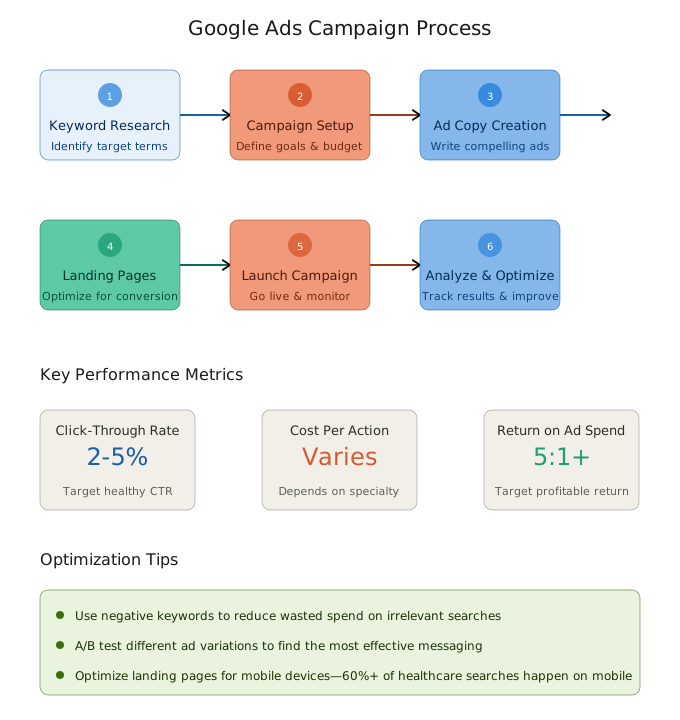
Define Your Goals and Conduct Keyword Research
Before launching any campaign, medical practitioners must clearly define success. Most practices aim to increase appointment bookings. Secondary goals might include promoting specific services—like a dental clinic launching implant procedures or a cosmetic surgery practice promoting a new treatment.
Keyword research is crucial. Healthcare providers must identify the specific terms their target patients use. A cardiologist’s research might include “cardiologist near me,” “heart disease treatment,” “cardiology consultation,” and “preventive cardiology.” Tools like Google Keyword Planner help identify search volume, competition, and estimated costs.
Create Compelling Ad Copy and Optimize Landing Pages
Effective ad copy for medical practices balances professionalism with approachability. Strong ads include:
- Clear Value Proposition: Explain what distinguishes your practice. “Board-certified cardiologists with 20+ years of experience” immediately establishes credibility.
- Call-to-Action: Tell patients exactly what to do. “Schedule your consultation today” or “Call now for your free evaluation” provide clear next steps.
- Trust Signals: Mention credentials, certifications, and patient testimonials.
- Location Information: Always include geographic details so patients understand accessibility.
When patients click ads, they should land on pages specifically designed to convert them into appointments. Effective landing pages display doctor credentials prominently, offer online appointment booking, include patient testimonials, clearly describe services, and make contact information easily accessible.
Advanced Strategies for Medical Practice Growth
Local Targeting and Geographic Optimization
Medical practices primarily serve patients within specific geographic areas. Google Ads allows precise location targeting:
- Target specific cities and zip codes
- Use radius targeting (all patients within 10 miles)
- Exclude areas the practice doesn’t serve
- Bid higher for nearby zip codes where most patients come from
Negative Keywords and Budget Optimization
Negative keywords prevent ads from appearing for irrelevant searches. A cosmetic surgeon might add “free,” “DIY,” or “cheap” as negative keywords to avoid showing ads to price-sensitive searchers unlikely to become patients.
Medical practices should set daily budgets aligned with business objectives. A solo practitioner might start with a $30-50 daily budget, while an established multi-provider practice might allocate $200-500 daily. Google automatically manages spending to reach that limit.
A/B Testing and Performance Optimization
Continuous improvement through A/B testing reveals what resonates with patients. Testing different ad headlines, descriptions, or calls-to-action shows which messaging converts best. Ongoing optimization ensures healthcare marketing budgets are efficiently deployed.
Measuring Success and Compliance
Tracking Conversions and Key Performance Indicators
Medical practices need conversion tracking to understand Google Ads ROI. Conversions include form submissions, phone calls, online appointments, or chat inquiries. Important KPIs include:
- Click-Through Rate (CTR): Percentage of people who see the ad and click it (2-5% is healthy)
- Quality Score: Google’s rating of ad relevance (higher scores lower costs)
- Conversion Rate: Percentage of visitors who schedule appointments (5-15% is typical)
- Cost Per Conversion: Total ad spend divided by conversions
Healthcare Compliance and Ethical Advertising
Medical practices must ensure advertising complies with healthcare regulations. Key considerations include:
- HIPAA Compliance: Never use patient names, health conditions, or testimonials without explicit written consent.
- FTC Guidelines: All medical claims must be truthful and substantiated. Don’t claim procedures are “cures” without proven evidence.
- Honest Messaging: Patient testimonials should reflect typical results, not exceptional cases.
- Accurate Credentials: Only claim certifications the doctor actually holds.
Building trust through transparency—clearly stating doctor credentials, honestly describing procedures, setting realistic expectations, and acknowledging potential risks—creates long-term patient relationships.
Common Mistakes to Avoid
Poor Keyword Selection and Mobile Neglect
Many medical practices waste budgets with overly broad keywords. A dermatologist shouldn’t bid on just “skin”—it’s too broad. Instead, target “dermatologist near me,” “acne treatment specialist,” or “mole removal.”
Over 60% of healthcare searches happen on mobile devices. Medical practices that don’t optimize ads and landing pages for mobile miss significant opportunities. Mobile ads should display quickly, include click-to-call buttons, use mobile-friendly layouts, and avoid intrusive popups.
Ignoring Performance Data
Medical practices that ignore quality scores, click-through rates, and conversion metrics miss critical optimization opportunities. Instead of ignoring poor performance:
- Rewrite underperforming ad copy
- Redesign landing pages that aren’t converting
- Refine keyword targeting to improve relevance
- Test different messaging approaches
Integrating Google Ads with Overall Digital Strategy
Combining Paid and Organic Marketing
Google Ads and search engine optimization (SEO) work best together. While Google Ads provides immediate visibility, SEO builds long-term organic traffic. A comprehensive medical practice strategy includes both—using Google Ads while SEO efforts develop (typically 3-6 months), then reducing ad spend as organic rankings improve.
Medical practices should also leverage social media marketing, email campaigns nurturing leads, and content marketing supporting ad keywords. This multi-channel approach creates multiple touchpoints with potential patients and builds comprehensive online visibility.
When to Hire Professional Help
Consider hiring a Google Ads specialist if current campaigns aren’t generating results, you lack time to manage campaigns, you’re losing patients to competitors’ ads, or you feel overwhelmed by digital marketing. The ideal healthcare marketing agency should have healthcare experience, show proven results with other medical practices, provide transparent reporting, and offer strategic guidance specific to your medical specialty.
Future Trends and Next Steps
Medical practices increasingly benefit from artificial intelligence-powered bidding strategies that automatically optimize performance. Video advertising continues growing—many practices now use video to demonstrate facilities, introduce staff, and share educational content. Voice search optimization becomes important as smart speakers and mobile voice searches grow.
Conclusion: Begin Your Google Ads Journey Today
Google Ads represents one of the most effective ways for medical practices to connect with patients actively seeking healthcare services. Success involves clear campaign goals, thorough keyword research, compelling ad copy, optimized landing pages, regular monitoring, healthcare compliance, and integration with other digital marketing channels.
Medical practices that commit to strategic Google Ads campaigns typically see increased patient inquiries, higher appointment booking rates, and stronger online visibility. In today’s digital healthcare landscape, Google Ads isn’t just a marketing option—it’s an essential tool for connecting qualified doctors with patients who need their expertise.
Whether working with an in-house team or professional agency, view Google Ads as an ongoing investment in your practice’s growth. The medical professionals who embrace data-driven advertising and continuously optimize their efforts will find themselves well-positioned for sustainable patient growth and long-term success.